Renfe data breach: what leaked ID numbers and travel history mean for you
In September, Spain's rail operator said the attackers got mainly names and email addresses. Its new notice adds DNI and NIE numbers, passwords and the journeys you took.
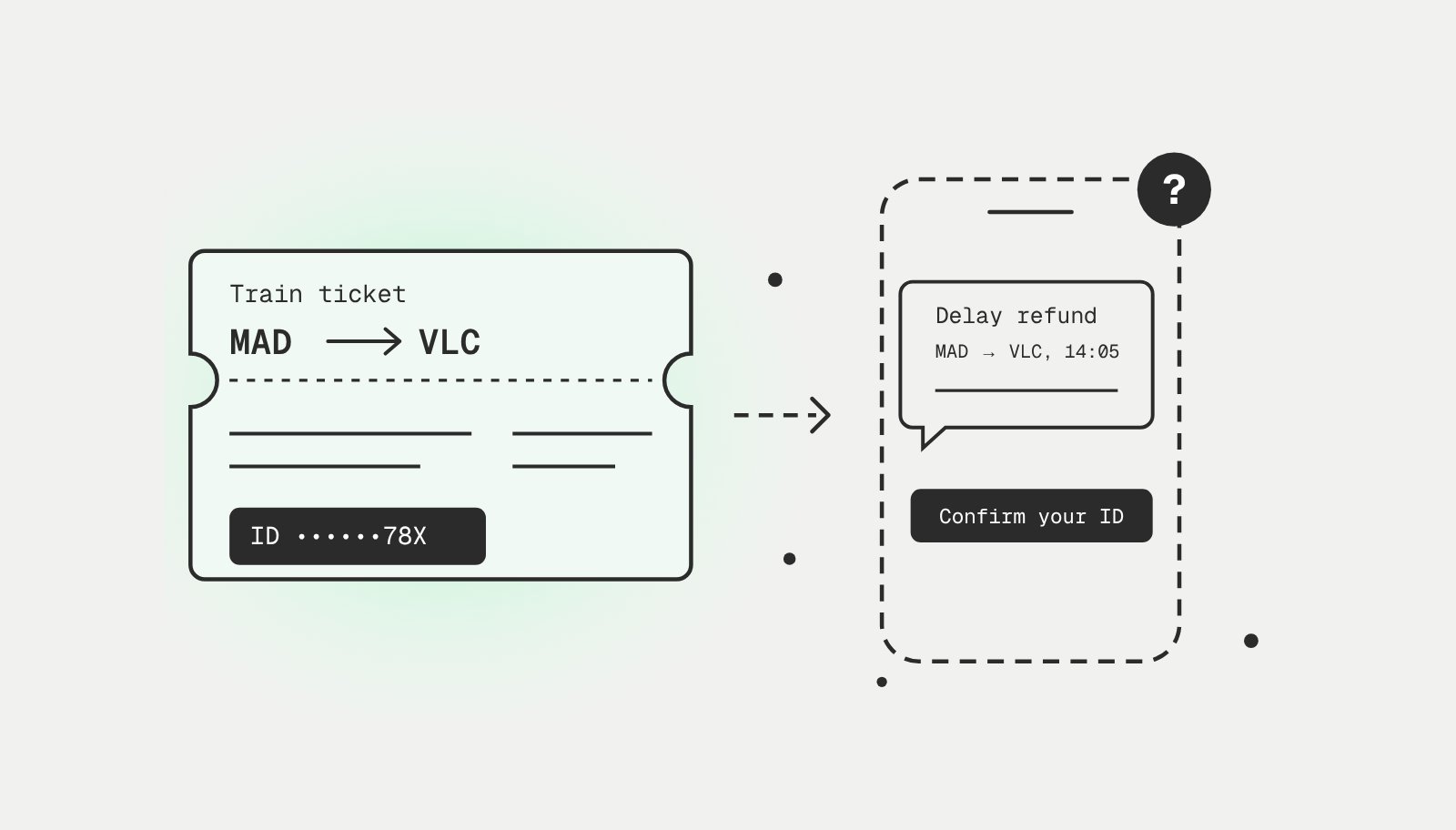
On 20 November, Renfe, Spain's national rail operator, began emailing customers about a security incident that may have affected their personal data. The incident itself dates back to 24 September 2026, when an outside party got into Renfe Viajeros systems linked to ticket sales.
What has changed is the list of data. In September, Renfe said the attackers had reached a limited amount of user information, mainly names and email addresses. It traced the attack to previously compromised servers at Adif, the rail infrastructure manager, that were connected to its own systems. It said there was no evidence of access to bank details, payment methods, DNI numbers or other especially sensitive information.
What the new notice says may be affected
- Identification and contact details
- DNI, NIE or equivalent ID document numbers
- Information about tickets bought and trips taken
- Account passwords, protected with cryptographic techniques so they can't be read directly
Renfe hasn't said how many customers are affected, and its investigation is still under way. It says it has no evidence that the data has been used fraudulently. It has notified the Spanish data protection authority (AEPD), national cybersecurity bodies and the Guardia Civil. Customers with questions about the incident can write to Renfe Viajeros' data protection officer at dpdviajeros@renfe.es.
Why ID numbers and trip records matter
A password can be changed. An ID number usually can't, and in Spain the DNI or NIE is asked for everywhere: at the bank, by phone companies, by energy suppliers and on many official forms. Someone who holds your name, ID number, phone and email has much of what a call centre uses to decide whether you are you.
The travel records add something new. Renfe itself warns that ticket and trip data can be used to infer travel patterns. The Spanish consumer organisation OCU makes the same point: combined with names and ID numbers, travel histories let someone reconstruct where people go, and that makes targeted phishing much more convincing. A message that names your actual Madrid–Valencia trip and offers compensation for a delay doesn't look like spam.
Why exposed personal data makes this worse
A breach list is rarely used on its own. Criminals add whatever else they can find: a home address from a directory, relatives on a people-search site, a mobile number in an old forum post, an employer on a professional profile. With that, a fake "Renfe refund" email can include your address, or a caller posing as your bank can recite your ID number and last trip to sound legitimate. The less of your life is searchable, the less there is to stitch together.
What to do now
Change your Renfe password, then change it on every other account where you used the same one, starting with your email. Renfe says especially weak passwords could be cracked by brute force.
Be sceptical of any message about trips, bookings, delays or compensation, even if it gets your details right. Open the Renfe website or app yourself instead of clicking a link.
Never share passwords, verification codes, card details or a photo of your ID in reply to an unexpected email, text or call. A caller who knows your DNI and travel history is still not verified: hang up and call back on a number you look up. Here's how the fake support call works.
Turn on two-step verification on your email, bank and phone accounts.
If you live in Spain, OCU suggests checking the Banco de España's CIRBE register from time to time for loans taken out in your name, and staying alert for months, as fraud attempts can come late.
If you are tricked into paying, contact your bank at once and report it to the Policía Nacional or Guardia Civil. In Spain, INCIBE's free and confidential helpline 017 gives cybersecurity advice every day from 8:00 to 23:00.
Use your GDPR rights
Under the GDPR you can ask Renfe for a copy of the personal data it holds about you. If you no longer use your account, you can ask it to delete your data under Art. 17, apart from what it must keep by law. If you get no proper answer, you can complain to the AEPD.
You can't pull back what was taken from Renfe. What you can shrink is everything an attacker could add to it. Our data broker opt-out guide explains how to ask people-search sites and data brokers to remove you.
BetterPrivacy searches people-search sites, data brokers, directories, forums and news archives for your details, helps you send GDPR or CCPA removal requests and tracks each takedown. A free scan shows your top 3 results in full, so you can see what a scammer holding this leak could find about you.
Sources
- Notificación personas afectadas — Renfe
- Renfe investiga un incidente de ciberseguridad vinculado a sistemas externos de Adif — Grupo Renfe
- Renfe advierte del posible robo de datos personales, contraseñas y DNIs en el ciberataque de septiembre (20 November 2026) — El Español
- Filtración de datos en Renfe (28 September 2026) — OCU
- Línea de Ayuda en Ciberseguridad — INCIBE